
Rice University offers its students a plethora of opportunities. While incredibly beneficial, this can also make it difficult to find your footing and zero in on the opportunities that really speak to you. The Center for Civic Leadership was an invaluable resource as I began to create my own personal academic and career exploration path. While scrolling through my emails one day, I came across a message about the Loewenstern Fellowship.
Initially, three opportunities stood out to me: El Banco de Alimentos de Bolivia (a food bank in Bolivia), Azadi (a refuge for survivors of sex-trafficking in Kenya), and Soweto (an organization fighting racism in Brazil). I submitted my application and hoped for the best. In November, I received the exciting news that I had been selected to intern for El Banco de Alimentos de Bolivia. I eagerly accepted, and this decision took me on a deeply transformative journey.


I had spent the past three and a half months delivering surplus food to vulnerable communities alongside the team at the food bank in Cochabama, Bolivia, and I had developed a deep attachment to both the community and its mission.
My last day interning at El Banco de Alimentos as a Loewenstern Fellow started off like any other. I sat on the kitchen floor of the food bank, rubbing Perla the dog’s belly as some of my other co-workers stood around me enjoying their morning coffee. My colleague, Yu, offered me one last piece of advice, saying, “Neha, no le hagas caso a nadie, sigue adelante, tú puedes.” (Neha, don’t worry about what anyone else says. You can keep going forward.)


This past semester at Rice, I have tried to do just that. Now that I am back on campus, I have felt a constant pull back to Bolivia and to the food bank’s mission that I have grown so deeply invested in. I would like to further explore the impact of food insecurity on Indigenous philosophy. I am excited to share that I have successfully acquired research funding through the Parish and Moody Research Fellowships here at Rice and will be returning to Bolivia in 2025 to further immerse myself in Indigenous Quechua culture and language.
My continued research aims to not only highlight the unique struggles of Indigenous communities, but also to elevate their profound wisdom in academic spaces and center a perspective that is all too often undervalued. I look forward to continuing to explore the impact of food aid and food insecurity on Quechuan communities, and I will also be conducting an interdisciplinary ethnographic between my two fields of study — economics and philosophy.


For a long time, “home” to me was a red brick house in a Maryland neighborhood. Later on, this concept became the concrete walls of Lovett College. Now, I realize that home is not a place, but also the people and memories that I carry in my heart. I feel endless gratitude toward Rice for being my “home” here in Houston and for also facilitating the opportunity to allow me to find another “home” almost 4,000 miles away in Bolivia. The new friendships that I have created that stretch across continents have not only helped me find community — they have also helped me foster a new sense of self.
-Neha, Lovett ‘26 (Published on 2/10/2025)
Keep Exploring
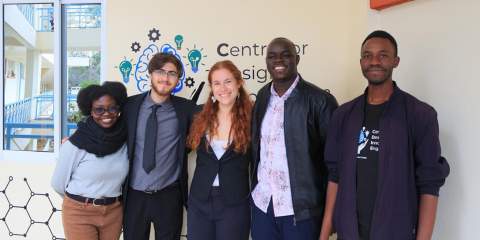
As a Social Policy Analysis and Global Affairs major, I (Sammi F., Chao ‘27) never expected to spend a summer designing maternal health devices in Kenya. Through the Rice360 Institute for Global Health Technologies, I traveled to Nairobi to help prototype low-cost devices targeting postpartum hemorrhage and pre-eclampsia. Here’s how stepping outside my academic comfort zone ended up teaching me one of the most valuable lessons of my college career.
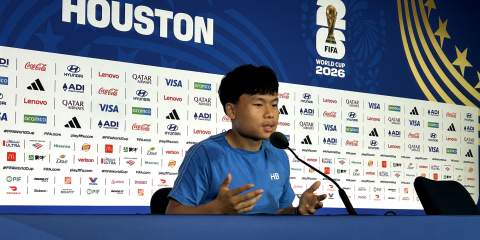
Growing up in a small village, I (Pu, Martel ‘29) vividly remember a dozen kids gathering around a tiny box television just to watch a soccer match. Our village didn’t have much, but for 90 minutes, none of that mattered. The FIFA World Cup is where dreams come true, communities unite and the entire planet speaks a single language: soccer. Looking back, it’s hard to believe that I went from watching the tournament on that tiny screen to playing a behind-the-scenes role in bringing these massive sporting events to billions of people across the globe. Here’s a look at what it’s really like to bring the game to life on the international stage!

Working on a major global event is a common goal for anyone interested in the sports industry, but at Rice, these opportunities can often start earlier than expected. I’m Jacob L., Hanszen '27, and over the past year, I worked with the Houston Host City Committee to prepare for the 2026 FIFA World Cup. Here’s a look at my experience and the lessons I learned while helping to lay the groundwork for the tournament.
Helpful Links
713-348-7423
admission@rice.edu
M-F 8:30 a.m. to 5 p.m. CT