
Intern Life
I boarded my flight to study abroad in Madrid for six weeks with few expectations. I was participating in Rice in Madrid, a program offered through the Center for Languages and Intercultural Communication (CLIC) that awarded six credit hours for a joint class and internship. I first learned about the program from Dr. Luis Duno-Gottberg, my former Spanish professor and current Magister at Chao, my Residential College.
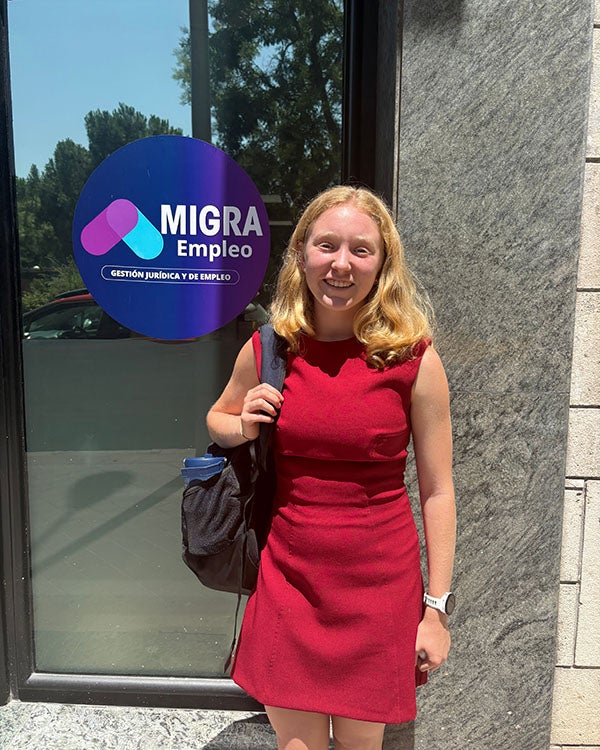
Before leaving for the trip, I submitted my resume and cover letter in both English and Spanish to IES, the study abroad organization partnering with Rice. IES pitched us to local Spanish companies, and I was matched with an immigration law firm called MigraEmpleo. After a Zoom interview to confirm the role was a good fit, I was set to officially start working upon my arrival in Spain.
Once the program started, my weekdays were spent interning at the firm. By day two, I was messaging hundreds of potential clients on WhatsApp and familiarizing myself with various migration pathways. I quickly learned to recommend student visas (estancia por estudios) when possible. Our firm partnered with a university to help migrants satisfy visa requirements, so it was the most straightforward route. However, many clients didn't reach out until after arriving in Spain. And if they had already resided in the country or anywhere else in the European Union for more than 30 days, they no longer qualified for a student visa. Those who arrived in the EU or Spain prior to 2026 could apply through the Extraordinary Regularization Process (arraigo) for a visa, which granted a one-year temporary residency and work permit. Frustratingly, many people who wrote to us had lived in Spain for over 30 days but arrived after January 1, 2026. In those cases, they were only left with two options: return to their home country for at least 90 days and re-enter on a student visa, or remain in Spain irregularly for two years before applying for social settlement (arraigo social). Most chose the second option, as returning home was simply too dangerous.
Spanish Politics & Culture Class
When I wasn’t working, I was taking Dr. Luis Duno-Gottberg’s class and seeing as much of Spain as possible. In Professor Gottberg’s class, we often discussed convivencia, or coexistence. Many religions have existed and ruled in Spain over the past centuries, and traces of their rule are still apparent across the country. This shared history can be seen in the mix of sacred buildings that still stand today.
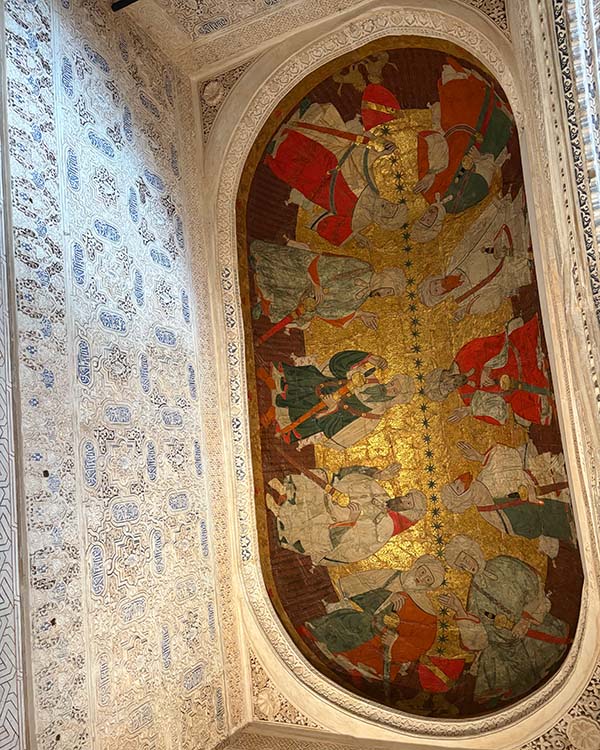
Our class traveled to Granada, Toledo and El Escorial to see examples of convivencia. In Granada, we witnessed it on the ceiling of a sacred building in Alhambra through the beautiful gold paintings of what looked like prophets and animals. These pictures go against the Islamic rule of aniconism, so we can safely assume they were painted by Christians after they took control of Spain in 1492.
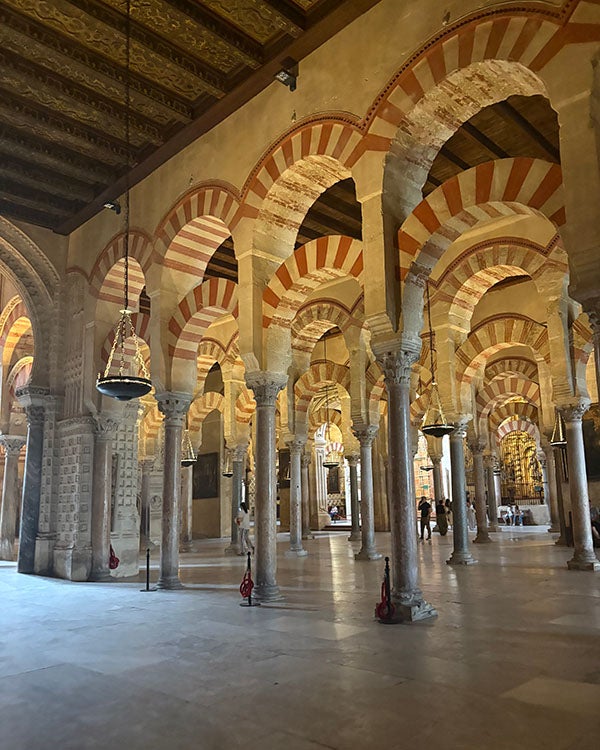
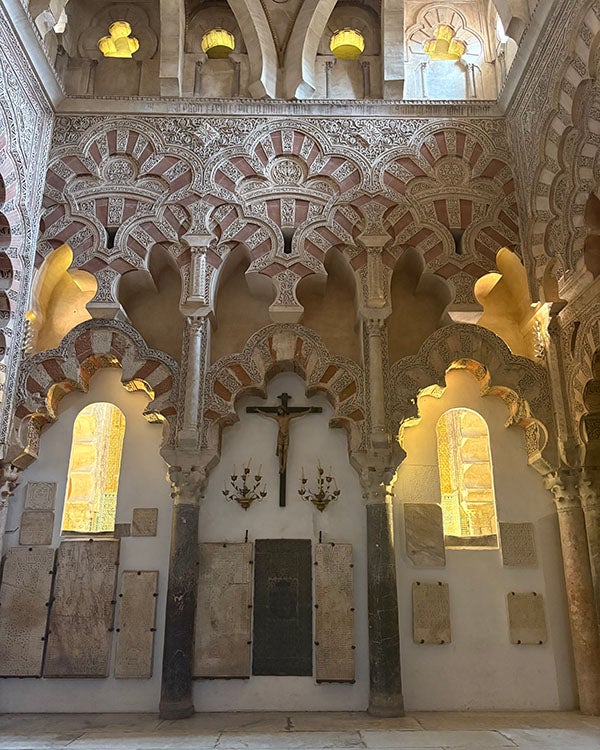
In Toledo, we toured an ancient mosque covered with paintings of Christian saints and angels. And in Cordoba, we stood under the red and white arches of the Mosque-Cathedral Monumental Site, which were created by the Arabs. Today, crosses can be seen alongside the Arabic designs and writings, and mass is held in the site’s chapels.
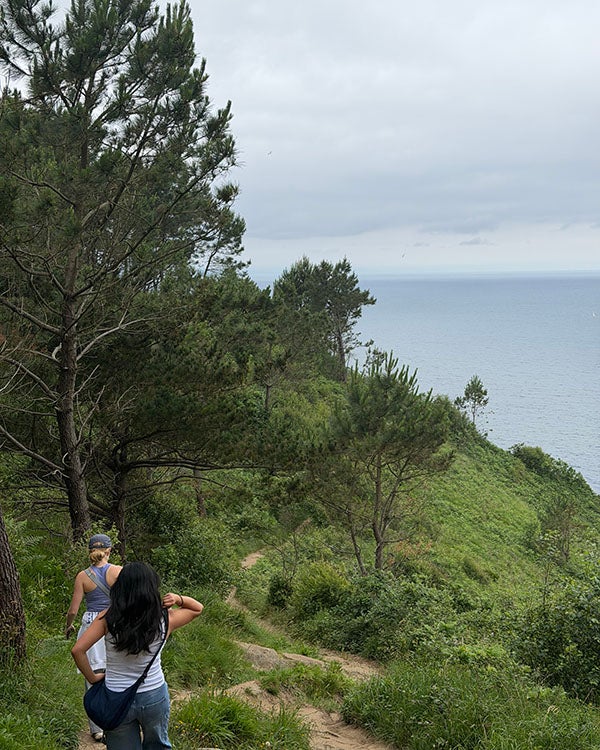
In class, we also examined the Spanish Civil War and its long-lasting effects. Francisco Franco, a fascist dictator who ruled over Spain for 36 years, preached extreme nationalism. His belief in the idea that Spain was one political unit made him discourage Spain from associating with particular regions, believing it would tear the nation apart. He promoted borders, claiming they protected Spain from the “anti-Spain.” I found this information especially interesting as I was hiking in San Sebastián, a gorgeous beach town in northern Spain, with my classmates. During this hike, I received a notification from my cell phone carrier telling me that I had just entered France. For me, this experience spoke to the insignificance of “borders.” After all, we were still on the same hike and surrounded by the same trees, taking in the same views. The only difference was that one single step dictated what country we were in, what internet plan our phone followed, what language we were supposed to speak and what rules we had to follow. It was all so arbitrary!
Lessons Learned
Madrid taught me the importance of critically examining the history, laws and regulations of every place I enter. How can immigration pathways be more clearly explained to Latin American migrants in their home countries before they leave for Spain? How can all ethnicities and religions be fairly represented across Spanish society? Is maintaining ancient architecture enough, or must we take more active steps to preserve cultural heritage?
These are questions I will continue to investigate in the U.S. and work toward answering through my future travels. I returned with greater maturity and empathy, and most importantly, a hunger to keep learning and put my knowledge to work driving real change.
-Izzy L., Chao ‘29 (Published on 10/6/26)
Keep Exploring
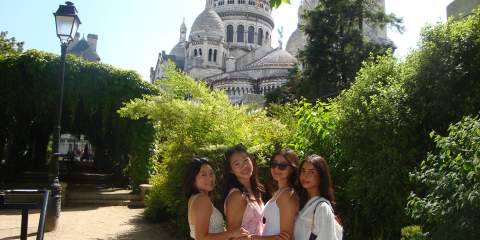
When I (Tamara L., Martel ‘29) was first considering studying abroad, the thought of moving across the globe felt exciting AND intimidating. The Rice in Paris program turned out to be a perfect three-week compromise, providing the support I needed to navigate a new culture while building lasting connections. Here’s how stepping out of my comfort zone changed my perspective on international learning.
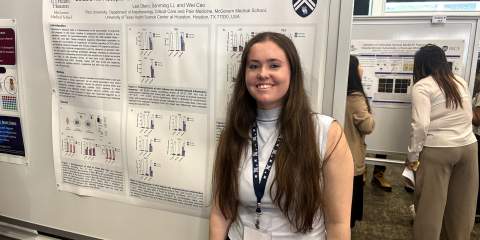
When I (Lexi O., Baker ‘28) was applying to college, I assumed getting involved in medical research was something that would take years to accomplish. But after my first year at Rice, that goal took shape sooner than expected. Here’s how I ended up working in an Alzheimer’s research lab in the Med Center.
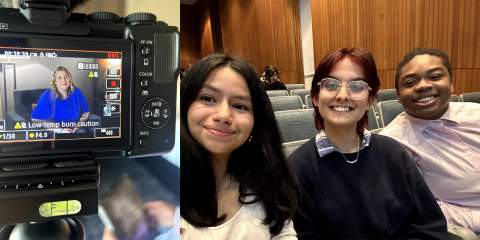
When I (Veronica Z., Will Rice ‘29) arrived at Rice as a Political Science and History student on a pre-law track, I expected a traditional path: student organizations, research and campus debates. However, taking a sociology course unexpectedly led me across the Texas Panhandle to investigate a potential wrongful conviction — and ultimately co-produce a documentary.
Helpful Links
713-348-7423
admission@rice.edu
M-F 8:30 a.m. to 5 p.m. CT