
There are two types of geoscientists: those who collected rocks as children, and those who fell into the field during college. I’m the latter — I wasn’t an Earth, Environmental, and Planetary Sciences (EEPS) major at first! The EEPS program at Rice is small, and daily life varies because the major is so interdisciplinary. There are five core classes, but the rest are flexible. Since introductory courses for EEPS are similar to other STEM majors, many students pursue a double major or a minor in EEPS. This course overlap makes it less difficult to change majors.

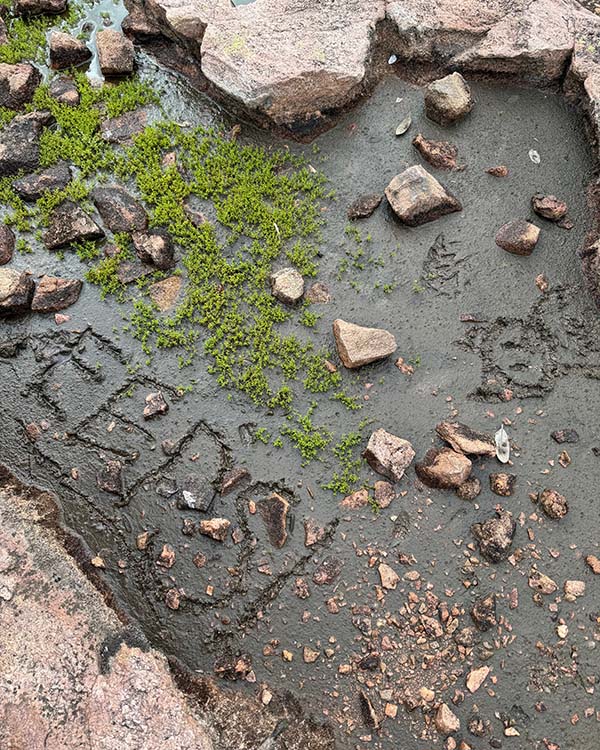
One of my favorite EEPS courses was the mineralogy and petrology core class. This was my first geology class, and it was the perfect intro to the discipline because I was still a chem major at the time. I learned how chemical principles can be applied to planet-scale processes — ranging from the formation of ore deposits to the birth of the Solar System. These applications piqued my interest and motivated a major change during my sophomore year. Thankfully, many of my chemistry credits were directly transferable.
I also went on my first field trip with this core class. We traveled to New Mexico to look at a diversity of igneous rocks, with stops including Valles Caldera and a former pegmatite mine. A highlight of this field trip was finding a rock that looks like a pinch pot of quartz being filled up by layers of muscovite. New to mineralogy, I didn’t have a discerning eye, and so it was difficult to tell whether I found something special. When I showed the rock to my knowledgeable TA, to my delight, he confirmed that it is indeed a cool rock.

Field trips are an important part of the EEPS major because real-world geoscience is messy, and time in the field allows us to practice making geologic interpretations while learning skills that don’t translate to a classroom setting. For example, during my EEPS capstone course, I learned about geologic mapping. Later on, I decided to do a traditional geology field camp, and all of my EEPS courses were helpful preparation. I was even able to receive a scholarship to help pay for a field camp, making it possible for me to participate in an international camp in Türkiye — one of the most tectonically complex regions in the world. I’m grateful I could challenge myself academically while visiting a new place.
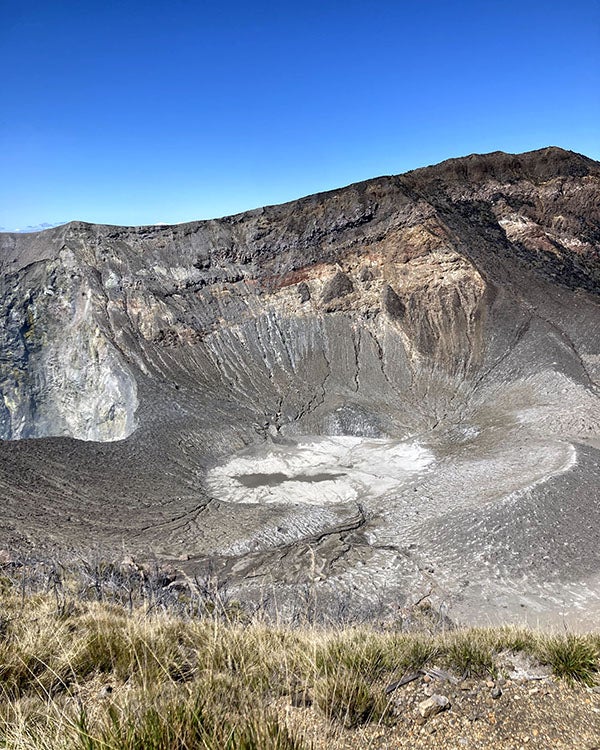
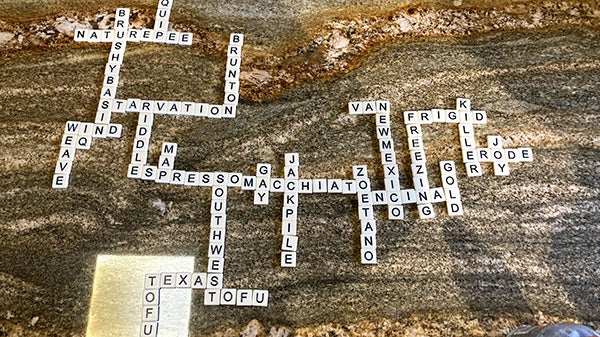
Another one of my favorite memories was hiking Turrialba in Costa Rica. The views on the climb up were beautiful, and it was surreal descending through clouds on the way down. At the peak, we watched sulfur degassing into the caldera, but we could only stay for 30 minutes since inhaling sulfur fumes can pose health risks. Most field trip days ended with several competitive rounds of Bananagrams, as many EEPS students love Bananagrams!

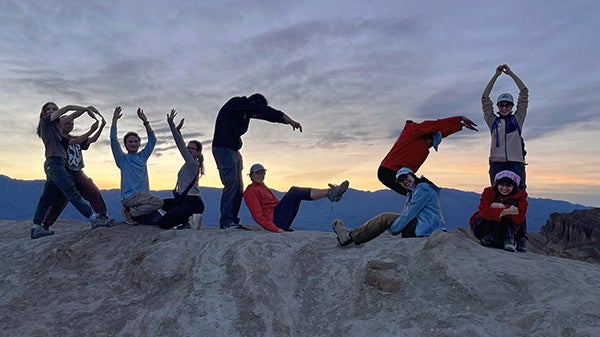
Beyond academics, these field experiences help you get to know other students. The flexibility of the EEPS degree is a positive thing, but one drawback is that it gets rarer to share classes with former classmates as you specialize in upper-level courses. Rice Undergraduate Geoscience Society (RUGS) field trips offer all EEPS students the chance to come together. Plus, they’re department-funded, offering travel opportunities to interesting places for free!
This sense of community extends to the faculty as well. My EEPS cohort is a tight-knit group, and we often hang out at RUGS events, like Rock Walk (tour of the cool rocks on campus) and Geolatto (learning about Italian geology while eating gelato). Because the graduate students and professors are so approachable, it’s also easy to get involved with undergraduate research.

If you’re an incoming student, I encourage you to take classes without stressing about a minor or second major. People often worry about classes not being “worth it” if they don’t directly contribute to a degree, but that point of view is limiting. My biased take? Sign up for an EEPS class for curiosity’s sake!
-Ainsley, Baker ‘26 (Published on 4/7/26)
Keep Exploring
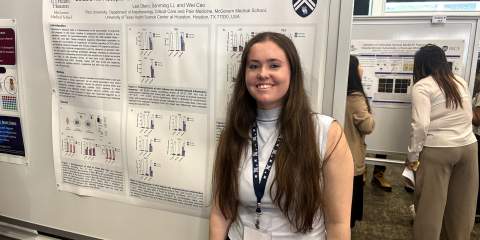
When I (Lexi O., Baker ‘28) was applying to college, I assumed getting involved in medical research was something that would take years to accomplish. But after my first year at Rice, that goal took shape sooner than expected. Here’s how I ended up working in an Alzheimer’s research lab in the Med Center.
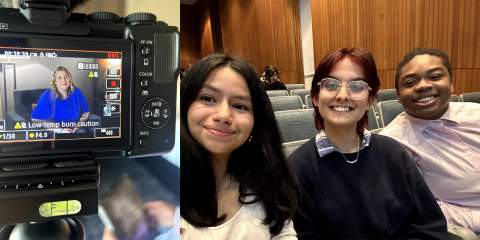
When I (Veronica Z., Will Rice ‘29) arrived at Rice as a Political Science and History student on a pre-law track, I expected a traditional path: student organizations, research and campus debates. However, taking a sociology course unexpectedly led me across the Texas Panhandle to investigate a potential wrongful conviction — and ultimately co-produce a documentary.
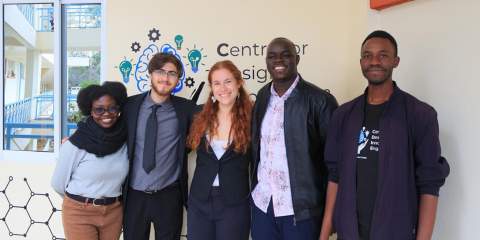
As a Social Policy Analysis and Global Affairs major, I (Sammi F., Chao ‘27) never expected to spend a summer designing maternal health devices in Kenya. Through the Rice360 Institute for Global Health Technologies, I traveled to Nairobi to help prototype low-cost devices targeting postpartum hemorrhage and pre-eclampsia. Here’s how stepping outside my academic comfort zone ended up teaching me one of the most valuable lessons of my college career.
Helpful Links
713-348-7423
admission@rice.edu
M-F 8:30 a.m. to 5 p.m. CT