
I’m Mariam, a rising junior studying English with a specialization in Culture and Social Change. As a kid, I would sit in the living room and write pages and pages of fiction, and in high school, I often wandered home from the library with a heavy bookbag digging into my shoulder. The choice was clear when it came to deciding my major, and my laser-focused obsession with English broadened once I entered Rice and saw the abundant areas of study offered within the School of Humanities.
Take, for example, the study of languages. Through the Center for Languages and Intercultural Communication (CLIC) and the Department of Modern and Classical Literatures and Cultures, the depth of language study at Rice is gloriously profound. And with 11 different languages offered through the School of Humanities, I couldn’t contain myself to just one. I started Arabic from scratch, enjoying the slow exploration of the alphabet and basic greetings. Then I took French, revisiting conjugations and later taking courses on culture and history.


Learning extends past the classroom with CLIC’s Rice in Country programs. I went to Toulouse after my freshman year, spending six weeks trekking through the narrow streets and taking note of observations to discuss in class. I did a homestay with a French-Moroccan family and also learned about the nuances of French identity. With over nine million foreign-born residents living in France, I felt unexpectedly at home. Late night kebab shops spilled light across the streets past midnight, weekly markets sold ether perfume, and newly constructed mosques held the same historically breathtaking quality as the centuries-old cathedrals. I left astounded, reconciling how my experience existed in tandem with the croissant, cigarette and cheese culture.
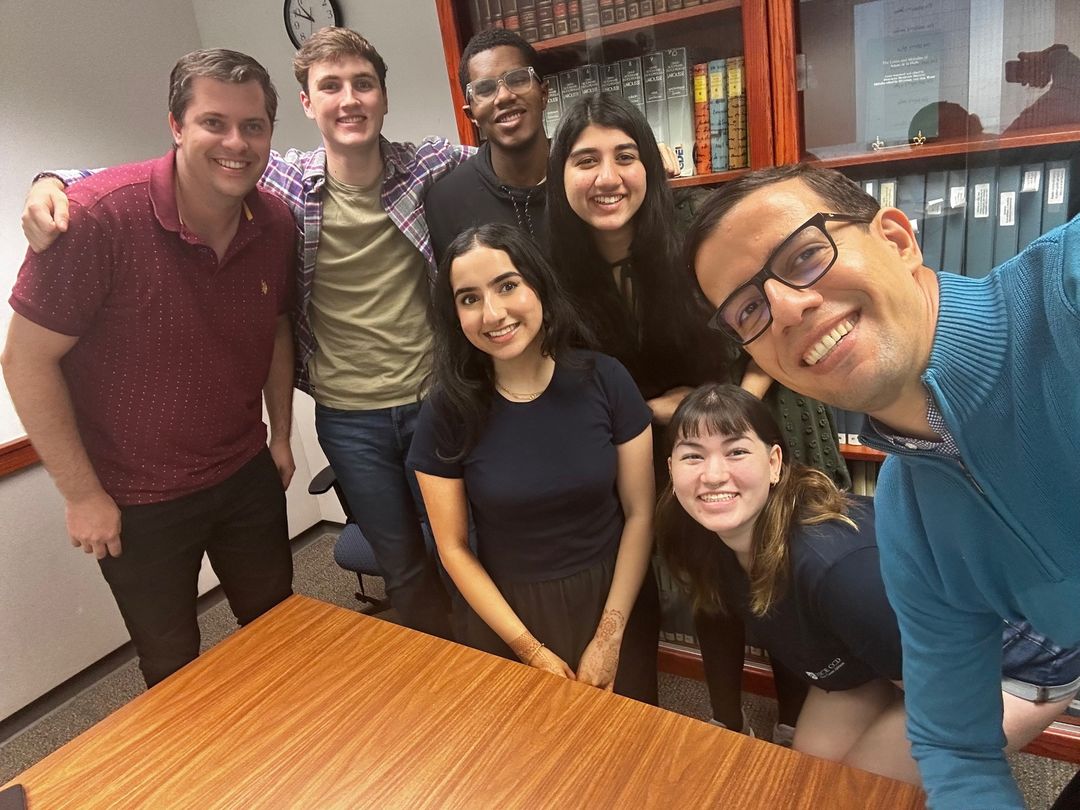

Beyond the dive into languages, I also discovered the fascinating world of archives. With Rice historian Dr. Portia Hopkins, I worked on a timeline for the Center for Engaged Research and Collaborative Learning’s (CERCL) hip-hop archives at the Woodson Research Center (WRC) at Fondren Library. The timeline, constructed using ArcGIS story maps, covered the history of hip-hop at Rice. I spent countless Friday afternoons sitting straight-backed in the WRC’s reading room, rummaging through boxes of magazines, posters and merchandise. Through my exploration, I learned about hip-hop culture’s intertwined relationship with activism and academia, and the collaborative concerts held to advertise HIV prevention and guest lecturers speaking at Dr. Anthony Pinn’s RELI 157/311 course.
Someone once told me that I pursued many side quests as an English major. I think this is true, and it stands as evidence that Humanities at Rice is expansive, stretching across buildings, disciplines, nations and cultures. Nevertheless, what I learn in my English courses construct a lens through which I engage with my studies. From Feminist Marxism to Critical Race Theory, the hard conversations in my English classes transformed my worldview from fixed boundaries and norms to an ever-constant conversation.
- Mariam, Wiess '27 (Published on 8/22/2024)


Keep Exploring
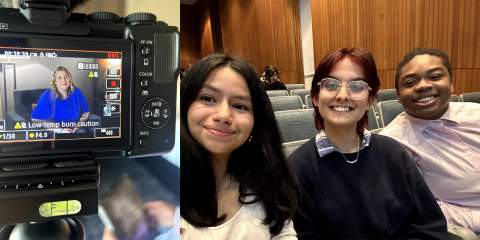
When I (Veronica Z., Will Rice ‘29) arrived at Rice as a Political Science and History student on a pre-law track, I expected a traditional path: student organizations, research and campus debates. However, taking a sociology course unexpectedly led me across the Texas Panhandle to investigate a potential wrongful conviction — and ultimately co-produce a documentary.
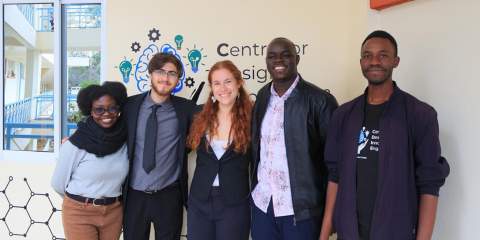
As a Social Policy Analysis and Global Affairs major, I (Sammi F., Chao ‘27) never expected to spend a summer designing maternal health devices in Kenya. Through the Rice360 Institute for Global Health Technologies, I traveled to Nairobi to help prototype low-cost devices targeting postpartum hemorrhage and pre-eclampsia. Here’s how stepping outside my academic comfort zone ended up teaching me one of the most valuable lessons of my college career.
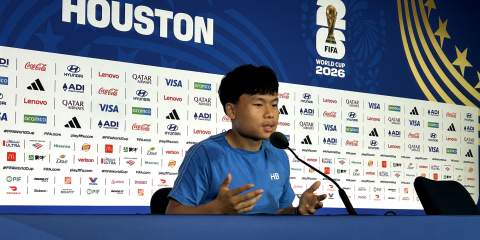
Growing up in a small village, I (Pu, Martel ‘29) vividly remember a dozen kids gathering around a tiny box television just to watch a soccer match. Our village didn’t have much, but for 90 minutes, none of that mattered. The FIFA World Cup is where dreams come true, communities unite and the entire planet speaks a single language: soccer. Looking back, it’s hard to believe that I went from watching the tournament on that tiny screen to playing a behind-the-scenes role in bringing these massive sporting events to billions of people across the globe. Here’s a look at what it’s really like to bring the game to life on the international stage!
Helpful Links
713-348-7423
admission@rice.edu
M-F 8:30 a.m. to 5 p.m. CT